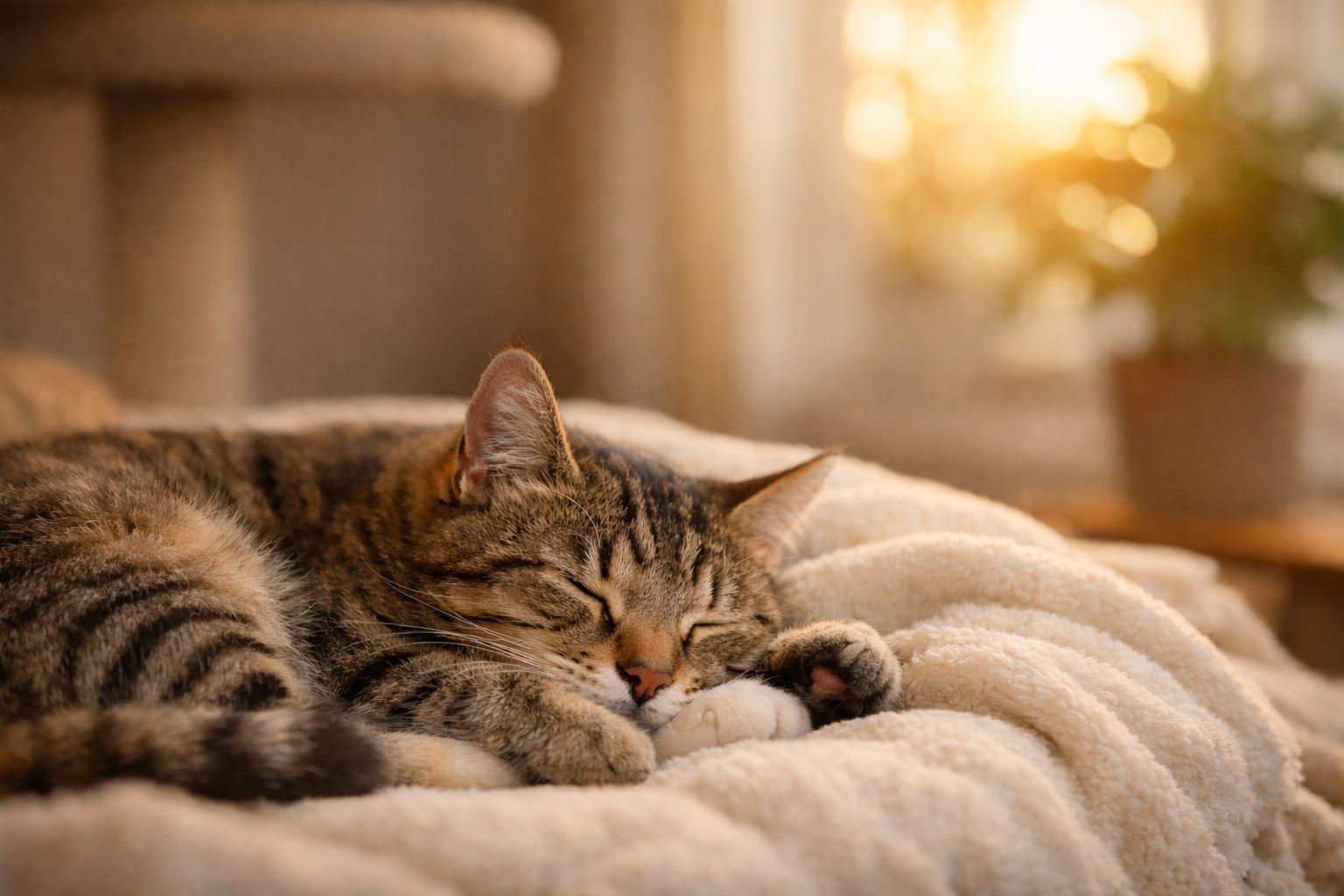
Why Do Cats Sleep So Much? The Ancient Predator's Secret
If you've recently welcomed a feline companion into your home, you've likely noticed a peculiar, yet endearing, habit: they sleep, a lot. It's a common sight to see your cat curled up in a sunbeam, sprawled across a couch, or tucked away in a cozy corner, seemingly in an endless state of slumber. This observation often leads new cat owners to ask the perfectly normal question: "Why do cats sleep so much?"
The truth is, your furry friend's prodigious sleep schedule isn't a sign of laziness but a fascinating echo of their wild ancestry. Domestic cats average between 15 to 20 hours of sleep per day, with some dedicated nappers pushing the limits to an impressive 20 hours! This extensive downtime is deeply ingrained in their evolutionary history, a secret passed down from ancient predators that relied on strategic rest to survive and thrive. Let's delve into the compelling reasons behind your cat's epic snooze-fests.
The Hunter's Legacy: Fueling the Feline Predator
To truly understand why your cat spends so much of its day in dreamland, we need to look back at their lineage. Our adorable domestic felines, despite their pampered lives, are direct descendants of formidable predators. Unlike grazing animals or scavengers, carnivores like cats must be in peak physical condition to secure their next meal. Their prey doesn't simply appear; it must be hunted, a task that demands immense energy and focus.
Cats are quintessential "ambush predators." Think of the breathtaking scenes from nature documentaries featuring lions or cheetahs. They engage in a meticulous dance of stealth, slowly inching closer to their target before launching into a sudden, explosive burst of speed and power. This hunting strategy, whether against a gazelle on the savanna or a toy mouse in your living room, requires incredibly short but incredibly demanding expenditures of energy. Each pounce, each sprint, each strategic stalk drains their reserves.
Because felines primarily consume fresh meat, they are compelled to hunt regularly. Hunting is not only physically taxing but also mentally demanding, requiring sharp senses and intense concentration. Moreover, smaller wild cats face the dual challenge of being both predator and potential prey, adding another layer of stress and vigilance that consumes vital energy. To efficiently conserve and restore this precious fuel for numerous hunting attempts, sleep becomes their most effective tool. It allows them to recharge, repair muscles, and consolidate their senses, ensuring they are always ready for that next critical moment. In essence, your cat's extensive sleep is a highly efficient energy management system, perfected over millennia. If you're curious about the specifics of their resting habits, you can learn more about understanding feline 15-hour naps and why they are so vital.
The Crepuscular Schedule: When the World is Their Hunting Ground
Another crucial piece of the puzzle regarding feline sleep patterns lies in their activity schedule. While many people mistakenly believe cats are nocturnal, the majority of felines, including our domestic companions, are actually crepuscular. This means they are most active during the twilight hours: dawn and dusk.
Why these specific times? Evolution has honed their senses, particularly their eyesight, for low-light conditions. Their eyes are marvels of adaptation, designed to detect subtle movements and navigate challenging environments when light is scarce, giving them a significant advantage over prey that may be less active or less visually acute during these transitional periods. This ancient rhythm dictates that while the sun is high and bright, their optimal hunting conditions are absent. Therefore, it makes perfect sense for them to retreat to safe, comfortable spots and catch up on their much-needed rest during the brightest parts of the day.
This ingrained crepuscular nature explains why your cat might be snoozing peacefully for most of the afternoon, only to erupt into a playful frenzy as the evening approaches or greet you with an insistent meow at sunrise. It's a cycle that you cannot—and should not—attempt to alter. Trying to force a cat to conform to a purely diurnal schedule goes against their fundamental biological wiring. Instead, understanding and respecting their natural rhythm can lead to a happier, healthier cat. To delve deeper into this fascinating aspect of their behavior, explore The Crepuscular Cat: Why Your Feline Sleeps All Day to Hunt.
Beyond Deep Sleep: Understanding Feline Rest Cycles
When we observe our cats sleeping, it's not always the same kind of rest. Feline sleep is a nuanced affair, characterized by distinct stages that serve different purposes. While cats do indulge in profound slumber, a significant portion of their "sleep" is actually a lighter, more alert form of rest.
There are generally two main types of feline sleep:
- Snoozing (Light Sleep): This accounts for approximately 75% of a cat's total sleep time. When a cat is snoozing, they might appear to be fully asleep, but they are incredibly tuned into their surroundings. You'll often see them sitting upright, perhaps with their eyes partly open and their ears twitching and rotating to catch the slightest sound. Their muscles are relaxed, but their reflexes are primed. This state allows them to conserve energy while remaining ready to spring into action at a moment's notice, whether to pounce on a perceived threat or an unexpected meal opportunity. This is the origin of the well-known term "catnap," paying homage to their extraordinary ability to rest in an instant.
- Deep Sleep: This is the equivalent of our REM sleep, essential for physical and mental restoration. During deep sleep, cats are typically curled up in a tight ball, completely relaxed, with their eyes fully closed. You might see their paws twitching, hear soft purrs, or even witness their whiskers or tail making subtle movements as they dream. Their breathing is slow and steady, and they are much less responsive to external stimuli. This deeper phase of sleep is vital for repairing tissues, strengthening the immune system, and consolidating memories – essentially, a full system reboot for their predator bodies and minds.
The ability to shift rapidly between these two states is another testament to their evolutionary adaptability, ensuring they get the rest they need without compromising their survival instincts.
Is My Cat Sleeping Too Much? Recognizing Healthy vs. Concerning Patterns
Given that cats sleep so much, it's natural for owners to wonder if their particular cat's sleep habits are normal. The 15-20 hour range is a general guideline, and individual cats can vary. Several factors influence how much a cat sleeps:
- Age: Kittens, much like human babies, need significantly more sleep for their rapid growth and development, often sleeping up to 20 hours or more. Senior cats also tend to sleep more as their energy levels decline and they become less agile.
- Activity Level: A cat with a stimulating environment, plenty of playtime, and opportunities for "hunting" (even if it's just a laser pointer) might appear to sleep less due to more active waking hours. Conversely, a bored cat might sleep more out of lack of stimulation.
- Health: Illness or discomfort can drastically alter a cat's sleep patterns. A sick cat might become lethargic and sleep excessively, or pain might prevent them from getting adequate rest.
- Environment: A safe, warm, and quiet environment promotes deeper, more consistent sleep. Stress or perceived threats can make a cat more restless.
While a lot of sleep is normal for cats, it's important to recognize when excessive sleep or a sudden change in patterns might indicate an underlying issue. Red flags that warrant a veterinary visit include:
- A sudden, dramatic increase or decrease in sleep duration.
- Lethargy even during waking hours, accompanied by a lack of interest in food, water, or play.
- Changes in eating, drinking, or litter box habits.
- Difficulty moving, stiffness, or signs of pain.
- Hiding excessively or unusual aggression/irritability.
Otherwise, embrace your cat's abundant sleep as a natural, healthy behavior. Provide them with comfortable sleeping spots, engage them in interactive play during their active periods, and allow them to follow their ancient rhythms. This understanding fosters a stronger bond and ensures your feline friend remains a contented, healthy, and wonderfully sleepy companion.
Ultimately, your cat's extensive sleep schedule isn't a quirk; it's a profound connection to their wild roots. It's the ancient predator's secret to energy conservation, strategic hunting, and survival. So, the next time you see your cat deeply engrossed in a nap, take a moment to appreciate the powerful, efficient hunter that lies within your sleepy companion. Their rest isn't just relaxation; it's preparation for their next great adventure, whether that's chasing a toy or simply dreaming of one.