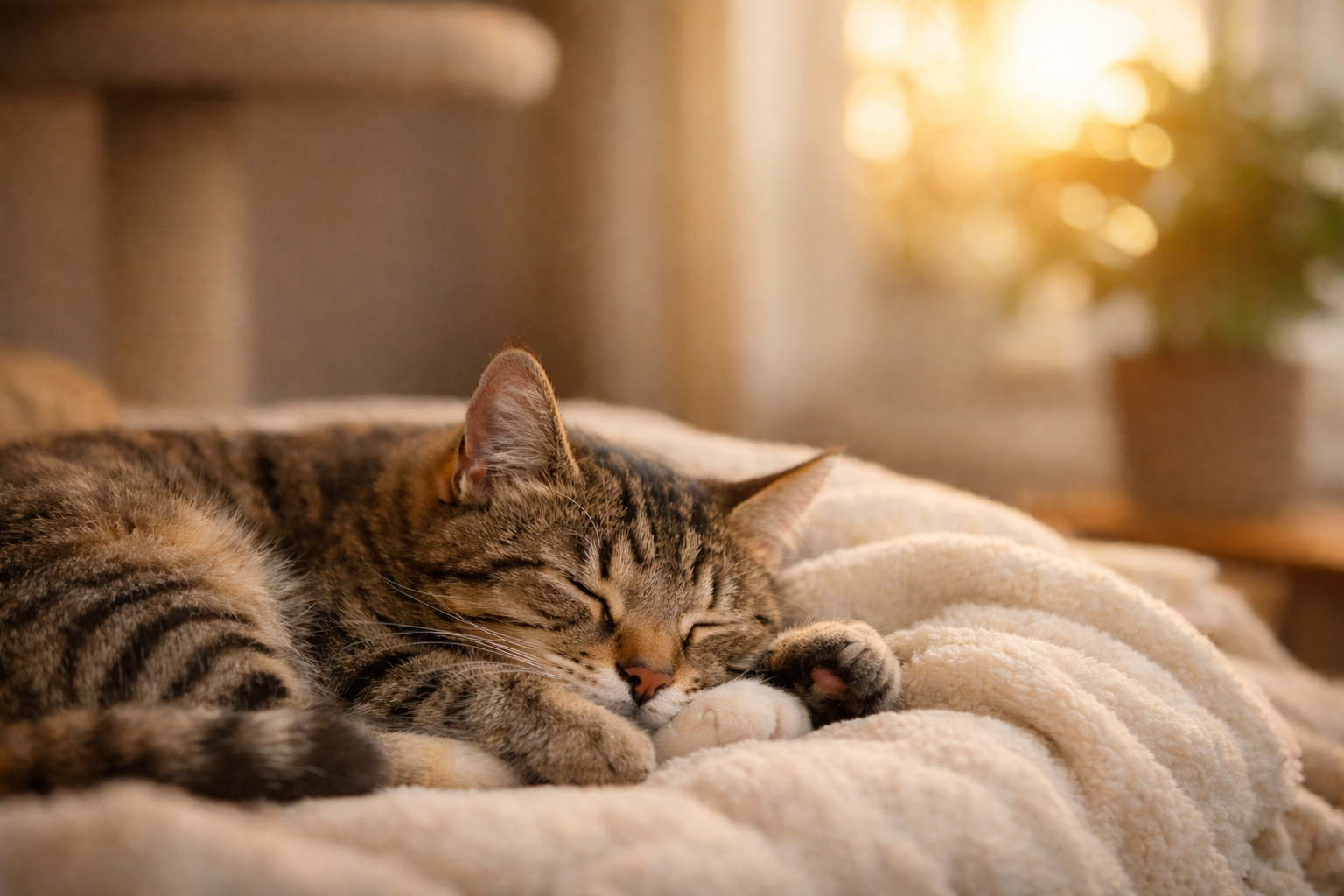
Is Your Cat a Sleepyhead? Understanding Feline 15-Hour Naps
If you've recently welcomed a furry feline into your home, you've likely noticed a significant pattern: your new companion sleeps… a lot. You might find yourself pausing, mid-stride, to gaze at your peacefully slumbering cat, perhaps curled up in a sunbeam or nestled in a cozy blanket, and wonder, "
Why do cats sleep so much?" You're not alone. Many new cat parents are initially surprised by the sheer amount of time their feline friends spend in dreamland.
Indeed, cats are renowned sleepers, averaging around 15 hours of sleep per day. While 15 hours might seem like an extraordinary amount, some domestic cats can comfortably snooze for up to 20 hours in a 24-hour cycle! This isn't a sign of laziness or boredom; rather, it’s a fascinating testament to their ancient lineage and unique biology. Understanding why your cat dedicates so much time to rest reveals the wild heart beating within your beloved pet.
Evolutionary Roots: The Hunter's Rest
To truly grasp the depths of feline slumber, we must journey back in time, tracing our domestic cats' ancestry to their wild counterparts. Forget about animals that graze idly on grass; your cute little furball descends directly from a long line of apex predators. This fundamental truth is the cornerstone of their extensive sleep requirements.
Think about the majestic lions, cheetahs, and jaguades you see in nature documentaries. These magnificent creatures are carnivores, meaning their survival hinges on their ability to hunt and capture prey. Unlike herbivores who can simply munch on abundant vegetation, carnivores must exert tremendous energy to secure a meal. Hunting is not a guaranteed success; it involves strategy, patience, explosive speed, and immense power.
Cats, both large and small, are what experts term "ambush predators." Their hunting style isn't about endurance running over long distances, but rather short, incredibly demanding bursts of intense activity. They stalk, they wait, they pounce. This explosive energy expenditure, whether it's a lion bringing down a gazelle or your house cat "hunting" a toy mouse, requires significant recovery time. Once the hunt is over, or even if it fails, the energy stores need replenishing. Since felines primarily subsist on fresh meat and aren't scavengers, they must hunt frequently, making consistent energy conservation a top priority.
Furthermore, smaller felines, like our domestic cats, historically faced the dual challenge of being both predator and potential prey. This added layer of vigilance and stress further necessitated efficient energy management. So, how does a cat conserve energy as efficiently as possible for these numerous, demanding hunting attempts? The answer is simple and profound: sleep. By dedicating a significant portion of their day to rest, cats recharge their internal batteries, preparing for the next burst of activity. This isn't just a preference; it's a survival strategy honed over millennia. For a deeper dive into this fascinating aspect, you might enjoy reading
Why Do Cats Sleep So Much? The Ancient Predator's Secret.
The Crepuscular Lifestyle: Why Day Naps Are Essential
Beyond their predatory nature, another key factor influencing your cat's sleep schedule is their crepuscular nature. Unlike truly nocturnal animals that are active exclusively at night, or diurnal animals that are active during the day, crepuscular animals are most active during the twilight hours – dawn and dusk. This unique biological rhythm perfectly aligns with the activity patterns of their natural prey, which are often out and about during these low-light periods.
This crepuscular lifestyle explains why your cat often gets a sudden burst of energy in the early morning or evening. Their finely tuned senses, particularly their remarkable eyesight, are perfectly adapted for these conditions. Cats possess an incredible ability to see in near darkness, far superior to humans, thanks to a higher number of rods in their retinas and a reflective layer called the tapetum lucidum. This evolutionary advantage allowed them to effectively navigate and hunt when the sun wasn't at its peak, providing cover and opportunity.
Given that their peak hunting and play times are at dawn and dusk, it logically follows that cats must get the majority of their rest during the less optimal hours – primarily during the day, and sometimes in the deep parts of the night. This isn't a behavior you can, or should, try to alter significantly. It's an ingrained biological cycle, as fundamental to their being as your own need for night-time sleep. Trying to force a cat to conform to a purely human diurnal schedule can lead to stress and behavioral issues. Embrace their natural rhythm; it's part of what makes them so unique! Discover more about this fascinating schedule in
The Crepuscular Cat: Why Your Feline Sleeps All Day to Hunt.
Decoding Feline Sleep: Naps vs. Deep Slumber
When we observe our cats sleeping, it might appear to be one long, continuous slumber, but feline sleep is actually quite complex and varied. Cats cycle through different stages of sleep, much like humans do, though with a different distribution. The popular term "catnap" isn't just a cute phrase; it pays homage to the extraordinary way felines rest.
The majority – roughly 75% – of a cat's sleep time is spent in a state of light sleep or "snoozing." During these periods, your cat might appear to be fully asleep, but they are often coiled loosely, sometimes even sitting upright. Their eyes might be partly open or barely slits, and their ears will frequently twitch and swivel, constantly monitoring their surroundings for any unusual sounds. They are in a highly alert, semi-conscious state, ready to spring into action at a moment's notice. This light sleep allows them to conserve energy while maintaining a heightened sense of awareness, a crucial trait for an animal that was once both predator and potential prey.
The remaining 25% of their sleep is dedicated to deep sleep. This is when your cat is truly "out." You'll often find them curled up tightly, sometimes with their face buried in their paws or tail, their eyes completely closed. During deep sleep, you might notice subtle muscle twitches, whisker movements, or even soft purrs or chirps as they dream. This stage is vital for physical and mental restoration, solidifying memories, and repairing tissues. While deep sleep is less frequent, it's just as important for their overall health and well-being.
Is Your Cat Sleeping Too Much? When to Be Concerned
While it's clear that cats are champion sleepers, a common concern for new owners is determining if their cat's sleep patterns are normal or indicative of an underlying issue. As we've established, 15-20 hours of sleep per day is perfectly within the normal range for most adult cats. However, it's important to differentiate between normal deep rest and lethargy or excessive sleep caused by health problems.
Here are some signs that might indicate a need for veterinary attention:
- Sudden Increase in Sleep: If your usually active cat suddenly starts sleeping significantly more than their established norm (e.g., jumping from 15 to 22 hours) without any obvious environmental changes, it could be a red flag.
- Difficulty Waking Up: A healthy cat should be relatively easy to rouse from even deep sleep. If your cat is unresponsive or unusually sluggish when woken, consult your vet.
- Lethargy During Waking Hours: A sleepy cat will still be alert, playful, and engaged during their waking periods. If your cat seems listless, uninterested in play, or generally low on energy even when awake, this is concerning.
- Changes in Appetite or Thirst: A significant increase or decrease in food or water intake alongside increased sleep can signal illness.
- Behavioral Changes: Hiding more, unusual aggression, or a change in litter box habits accompanying excessive sleep should be investigated.
- Age Factors: Kittens and senior cats often sleep more. Young kittens need extra sleep for growth and development, while older cats may sleep more due to joint pain, cognitive decline, or other age-related health issues. Always monitor seniors closely for changes.
To ensure your cat is getting quality sleep and adequate waking activity, provide a stimulating environment with regular playtime, puzzle feeders, and vertical spaces for climbing. These outlets allow them to express their natural predatory instincts and help them maintain a healthy sleep-wake cycle.
Conclusion
Your cat's propensity for a 15-hour nap, and often more, is not a sign of idleness but a finely tuned biological adaptation. From their ancient origins as efficient ambush predators to their crepuscular activity patterns, every snooze serves a vital purpose: conserving energy for the next burst of play, the next "hunt," and simply maintaining their optimal health. By understanding these fascinating sleep patterns, you can better appreciate the wild heart that beats within your domesticated companion and ensure they have the perfect environment to thrive, both awake and in dreamland. So, the next time you see your cat lost in slumber, remember: they're not just sleeping; they're perfectly fulfilling their feline destiny.